
After a decade of coaching, I wrote and published my first book. Thinking about Thinking: An Introduction to Observing Your Own Mind.
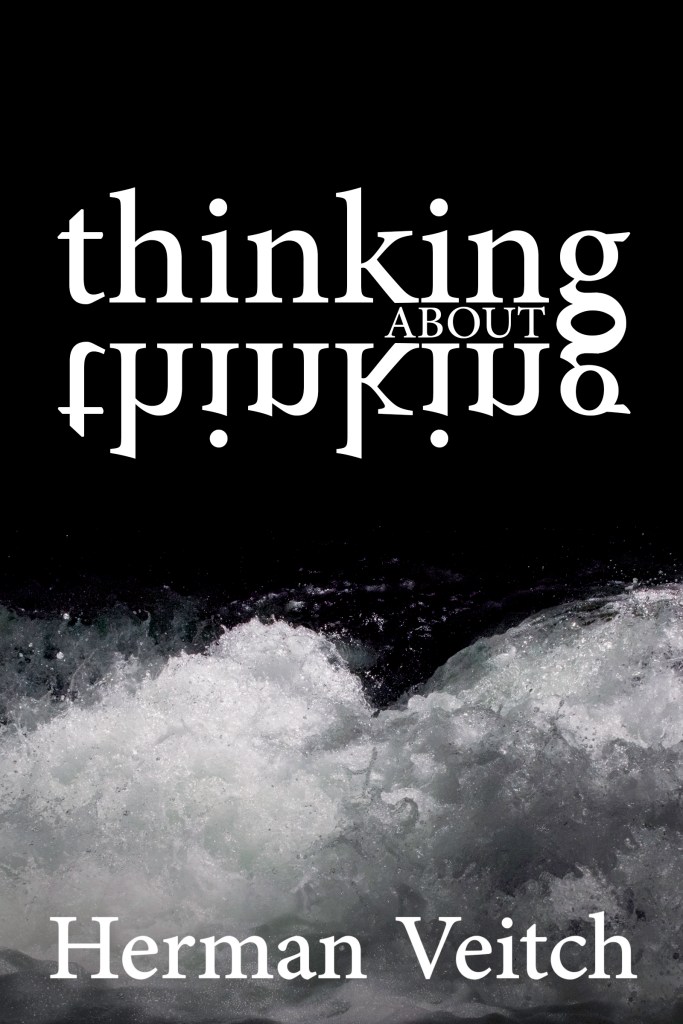
I started to notice a pattern in the process my coaching clients used to reach their goals. This pattern is captured in Thinking about Thinking. The book is also uniquely written. Because I know readers are busy, wrote the book with short “Blinks” that allow you to digest the core concepts of the book on the go. If you want to understand more, you can invest some time in reading the rest of the chapter.
You can find an E-book copy on Draft2Digital or Amazon Kindle. Amazon also gives you the option to buy a hard copy. You can also download a free PDF version of the blinks here.
Here is a review of one of my readers:
We live in an age where we are constantly told to update Windows, Thunderbird, Firefox, Avast, and the like. So we update for fear of not being able to operate these things to which we are so inextricably attached. But what about our brains, our minds? Do we ever receive equivalent updates for our thinking?
Thinking About Thinking: An Introduction to Observing Your Mind (2017) by Herman Veitch is a guide to doing just this: updating our perceptions, our thinking, our behaviour. An experienced counsellor and mentor, Herman Veitch writes in an accessible, easy manner and makes complex concepts easy to understand. A firm and gentle affirming teacher, he invites his readers to sit beside him as he shares valuable life lessons and information for living the best life we can. Thinking about our actions is a good way to do this. He argues that “the quality of what you do is determined by the quality of your thinking.”
Veitch offers useful tools to guide us in this quest. One of these is the normal distribution curve which can be a useful thinking tool he says. For example, we can apply this to our perceptions about people, the world, ourselves:
We can assume that half of the population’s departure point is from an error detection point. They tend to be pessimistic, think the world is dangerous, and easily find fault. But remember, this is a continuum and constantly dynamic. This half only needs to apply more effort to find the solution. Of this half, 2% are unmovable in their negativity, 14% are stuck in their ways and will change with great difficulty, but 34% see the error. This acts as a warning signal for the human race that we need to fix that which is not working. The other half of the normal distribution curve consists of solution generators. They are optimistic and see the world as a safe place: 2% of them live in la-la land, 14% tend to be naïve and are dreamers, and 34% create solutions to the errors that the pessimist presents to them.
And since we humans are capable of both positive and negative responses, we have the freedom to choose our thoughts and feelings as to whether or not the world is safe or dangerous, redeemable or irredeemable.
Examining emotions is another means to understanding our behaviour, inner and outer. Enter the amgydala, one of the centres of the limbic system — the emotional centre of the brain. While the limbic system itself does not actually mature, our emotional responses can be more mature when our ‘buttons’ are pressed. Veitch depicts the amygdala as a sheriff in an old Western movie with ‘wanted posters’ on his office walls. We can update these posters by choosing to respond to something provocative either in the way of a two-year-old or that of an adult. Thinking about emotions and learning more about them influences our actions.
Thinking creatively is not relegated to the domain of artists. “Creativity is embedded in every aspect of our lives, and it asks us to go beyond our conditioning” (Veitch). When we risk undoing and re-examining our conditioning, belief systems and old ways of doing things we are thinking in a creative way. Veitch encourages us:
Be interested and fascinated. Be inquisitive enough to experiment and be prepared to be joyfully surprised. Every time we make a new connection or find out how things can be renewed, our brain rewards us with a dopamine injection. This happy hormone rewards us with a lovely freedom, a lightness that allows us to move forward with confidence.
The book is rich with such examples to prompt us to think and behave in new ways in order to become our best selves, to become fully adult and to leave behind that which does not serve. So if you think think you might like to update your thinking and not only your Windows, Thunderbird or Firefox, go get a copy of this book.
 Herman Veitch
Leave a comment